May 26, 2026
A confident smile often starts with properly aligned teeth, but visible spacing can make many patients wonder if they can ever achieve a seamless result. The direct answer to whether braces can fix gaps between teeth permanently is yes, provided you follow through with professional retention protocols. Understanding whether braces fix gaps between teeth permanently is important before starting orthodontic treatment, as long-term stability depends on proper treatment and retention.
In most cases, braces can close gaps between teeth permanently when followed by proper retention. This guide covers the biological process, realistic timelines, and clinical care so you can build a gap between teeth treatment and a permanent plan that works for your unique smile.
Yes, when treatment is completed and retainers are worn as prescribed. Braces move teeth and roots while bone remodels to lock new positions. Consistent nighttime retainer wear prevents natural drift, ensuring your closed gaps remain stable for life.
Gaps between teeth, clinically known as diastema, develop due to specific anatomical, behavioral, and environmental factors. Understanding why do gaps form between teeth helps patients determine whether orthodontics alone will resolve the issue or if additional dental work is required. Spacing is not always a cosmetic concern, as it can impact oral hygiene and bite function.
To help you evaluate the root causes behind your specific situation, the following table outlines common gap triggers, their clinical presentation, and the most effective treatment pathway. This breakdown clarifies whether your case requires standard braces for teeth gap correction or combined therapy.
Gap Cause | Typical Presentation | Recommended Treatment Pathway |
Jaw to tooth size mismatch | Generalized spacing across multiple teeth in both arches | Comprehensive orthodontics to redistribute space and align arches |
Thick labial frenum | Isolated gap between the two upper front teeth | Braces combined with a minor frenectomy to prevent tissue pressure relapse |
Missing or impacted teeth | Localized space where a permanent tooth never erupted or was extracted | Orthodontic space closure or implant bridge preparation |
Oral habits (tongue thrusting, thumb sucking) | Gradual forward flaring of front teeth | Braces plus habit correction therapy for stable alignment |
Gum disease progression | New spacing appearing in adulthood due to bone loss | Periodontal stabilization followed by careful teeth alignment treatment |
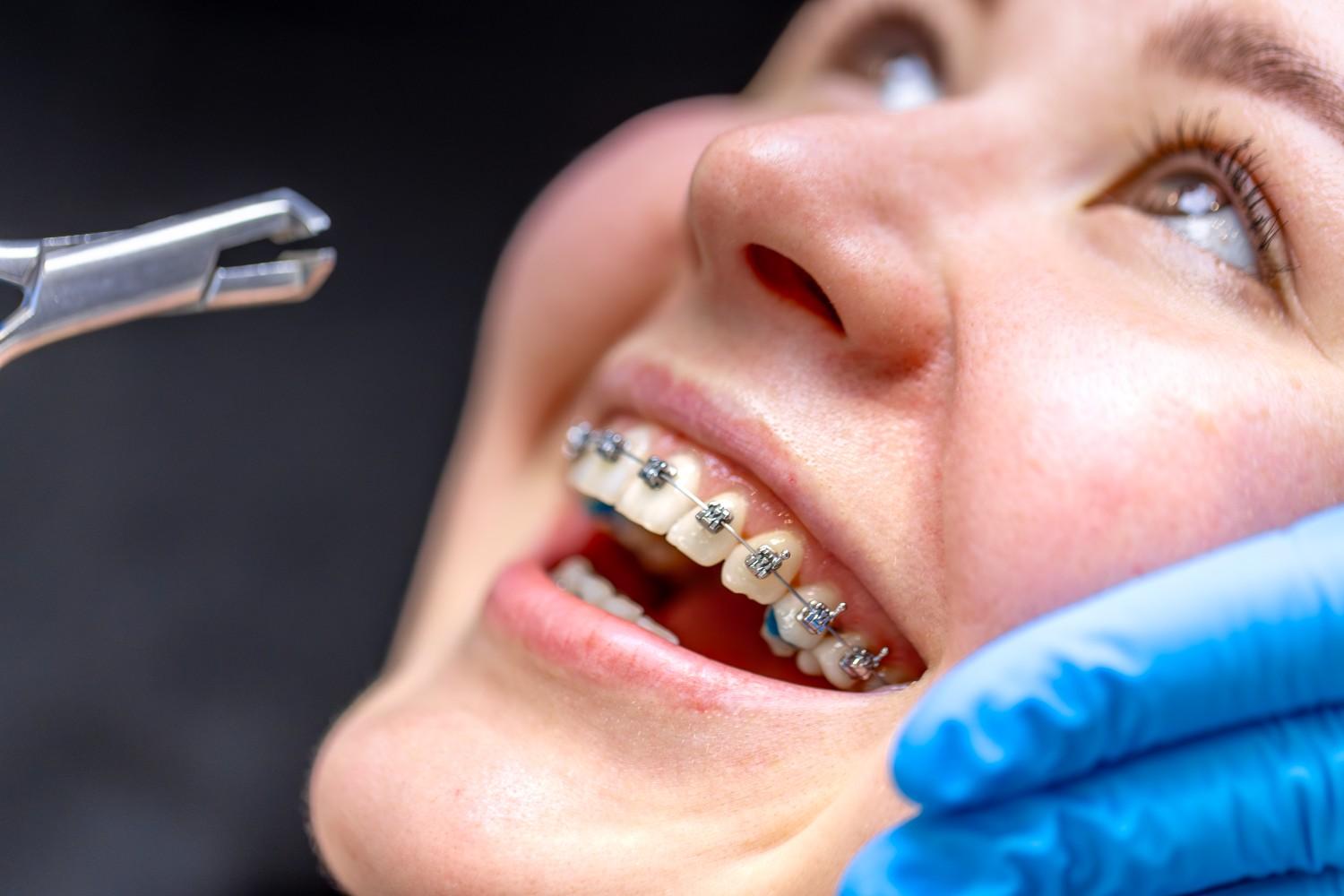
Yes, braces can fix gaps between teeth permanently when treatment is completed correctly and retention guidelines are followed. The permanence stems from how orthodontic appliances interact with your biology. Braces apply continuous, controlled pressure that moves both the visible crown and the embedded root of each tooth. As the tooth shifts, the surrounding jawbone remodels. Bone tissue dissolves slightly in the direction of movement and rebuilds securely behind the tooth, effectively locking it into a new position.
However, structural movement does not guarantee permanent results on its own. Teeth possess natural memory within the periodontal ligaments, which means they will gradually drift toward their original positions without stabilization. This is why can braces fix diastema permanently depends entirely on post treatment retention. Most orthodontists recommend lifetime nighttime retainer wear to maintain the closed space. When patients comply with retention protocols, the correction remains stable for decades, making it a truly permanent solution. Adults also benefit significantly from this process, which confirms that can adults fix teeth gap with braces remains highly viable regardless of age.
Orthodontic treatment follows a structured biological sequence designed to move teeth safely without damaging roots or gum tissue. Understanding how teeth move with braces helps patients track progress and maintain compliance throughout the process.
Light nickel titanium archwires are engaged first to gently level and align the dental arch. This phase focuses on correcting rotations, leveling uneven bite planes, and preparing a stable foundation for precise space closure.
Once alignment is achieved, the orthodontist introduces heavier rectangular wires and specialized mechanics like power chains or closing loops. Power chains are connected elastic modules that span multiple brackets and apply consistent, targeted force to pull teeth together. This stage physically eliminates the teeth gap.
After visible spaces close, treatment shifts to ensuring tooth roots sit parallel within the alveolar bone. This step prevents long term relapse, optimizes gum contours, and establishes a healthy occlusion that distributes chewing forces evenly.
Brackets are removed, enamel is polished, and impressions or digital scans are taken for custom retainers. Fixed lingual retainers or removable clear trays are placed to hold the new positions while bone density and periodontal fibers fully adapt.
Treatment duration varies based on gap size, arch complexity, patient age, and compliance with elastic wear. Smaller, isolated spaces close much faster than generalized spacing across multiple teeth. Understanding how long does it take to close teeth gaps with braces helps patients set realistic expectations and plan financially.
The table below maps common spacing scenarios to their estimated treatment windows. Use this reference when discussing your personalized timeline and evaluating the cost of braces for teeth gap in India with your provider.
Gap Scenario | Estimated Timeline | Key Factors Influencing Duration |
Small midline diastema (front teeth only) | 3 to 6 months | Frenum status, patient compliance, initial alignment complexity |
Moderate spacing affecting two to four teeth | 6 to 12 months | Arch symmetry, bite correction requirements, wire progression |
Generalized spacing across full arch | 12 to 24 months | Severity of malocclusion, need for interarch elastics, bone density |
Extraction space closure | 12 to 18 months | Amount of space to close, anchorage strategy, use of power chains |
Adult cases with periodontal considerations | 18 to 30 months | Tissue healing speed, controlled force limits, medical history |
Yes, gaps can return after braces treatment if retention protocols are ignored. The most common reason for relapse is inconsistent retainer wear. Periodontal ligaments require months, sometimes years, to fully reorganize around newly positioned teeth. Removing orthodontic appliances too early in the stabilization phase allows elastic fibers to pull teeth back toward their original arrangement.
Several clinical factors also increase relapse risk:
Orthodontists often place a fixed bonded wire behind the upper or lower front teeth combined with a removable nighttime tray. This dual retention approach significantly reduces the likelihood of spacing returning. When patients follow retention guidelines, the question do gaps come back after braces treatment becomes a non issue, and results remain stable long term.
Both traditional fixed appliances and clear removable trays effectively close dental spacing. The choice depends on gap complexity, aesthetic preferences, lifestyle factors, and clinical requirements. Understanding braces vs aligners for gap teeth helps patients select the system that matches their comfort and treatment goals.
To help you evaluate which system delivers optimal results for your specific case, the following table compares traditional braces and clear aligners across key clinical and lifestyle factors. This reference supports your decision when exploring teeth gap treatment with braces or alternative clear tray therapy.
Feature | Traditional Metal or Ceramic Braces | Clear Aligners (Removable Trays) |
Best for | Complex spacing, significant bite correction, extraction cases | Mild to moderate spacing, patients seeking discreet aesthetics |
Force delivery | Continuous 24/7 pressure via bonded brackets and archwires | Intermittent pressure requiring 20 to 22 hours of daily wear |
Oral hygiene | Requires specialized brushes and floss threaders around wires | Trays remove easily, allowing normal brushing and flossing routines |
Treatment predictability | Highly precise control over root movement and torque | Excellent for simple translations, limited for complex rotations |
Appointment frequency | Adjustments every 4 to 6 weeks | Check ins every 6 to 10 weeks, tray changes every 1 to 2 weeks |
When patients seek the best treatment for gap between teeth without surgery, cosmetic alternatives like dental bonding or porcelain veneers offer faster results. Bonding applies tooth colored resin to fill minor spaces in a single visit, though it requires replacement every five to ten years. Veneers provide durable aesthetic coverage but involve enamel reduction. These options address appearance only and do not correct underlying bite mechanics or root positioning.
Professional evaluation becomes necessary when spacing interferes with chewing efficiency, speech clarity, or oral hygiene maintenance. Gaps that trap food particles increase the risk of localized decay and gum inflammation. Early consultation allows orthodontists to assess bone structure, frenum attachment, and bite dynamics before spacing widens.
Adults frequently delay treatment under the assumption that orthodontic movement only works during adolescence. Modern bracket systems and aligner protocols safely shift adult teeth while respecting mature bone density. Scheduling a diagnostic visit clarifies whether your case requires comprehensive alignment, minor space closure, or combined periodontal care. Patients exploring braces treatment for gap teeth in Panvel benefit from clinics that offer digital scanning, 3D treatment simulation, and transparent pricing before committing to care.
For individuals seeking comprehensive evaluation and personalized spacing correction, Vichare Dental Clinic provides evidence based orthodontic planning, transparent retention protocols, and long term stability monitoring. Their approach combines precise bracket placement, modern biomechanics, and structured follow up care to ensure your closed spaces remain secure for life.
Closing gaps between teeth is not just a cosmetic improvement, but a long-term investment in oral health, bite stability, and overall confidence. Braces provide a scientifically proven method to move teeth into proper alignment while allowing bone and gum tissues to adapt and stabilize the new position over time. However, achieving lasting results depends not only on completing orthodontic treatment but also on following proper retention guidelines. Wearing retainers as advised by your orthodontist ensures that teeth do not gradually shift back to their original position.
Yes, can braces fix gaps between teeth permanently when treatment is completed and retainers are worn as advised by an orthodontist.
When patients commit to full treatment and retention care, orthodontic correction becomes stable, predictable, and long-lasting for years.
Can braces fix gaps between teeth permanently?
Yes, braces can close gaps between teeth permanently by gradually shifting teeth into proper alignment. However, wearing a retainer after treatment is essential to maintain results.
How long does it take for braces to close gaps between teeth?
It usually takes 6 months to 2 years depending on the size of the gap, tooth position, and type of braces used.
Do gaps between teeth come back after braces?
Gaps can return if retainers are not worn as instructed. Retainers help keep teeth in their new position permanently.
What causes gaps between teeth in adults?
Common causes include gum disease, missing teeth, thumb sucking in childhood, tongue thrusting, or natural jaw size and tooth size mismatch.
Are braces better than aligners for closing gaps?
Both braces and aligners can close gaps effectively. Braces are often preferred for complex cases, while aligners work well for mild to moderate gaps.
Can small gaps be closed without braces?
Yes, small gaps may sometimes be closed using dental bonding or veneers, but braces provide a more permanent and natural alignment solution.
Is it painful to close gaps with braces?
There may be mild discomfort during initial days or after adjustments, but it is usually manageable and temporary.
What happens if gap teeth are not treated?
Untreated gaps can lead to bite issues, food trapping, speech concerns, and in some cases, shifting of surrounding teeth over time.
Can adults fix teeth gaps with braces?
Yes, adults can successfully close teeth gaps with braces or aligners. Age is not a limitation for orthodontic treatment.
Do I need a retainer after closing teeth gaps?
Yes, retainers are essential after braces to prevent teeth from shifting back and to maintain permanent results.

Copyright © 2026 Vichare Dental Clinic Panvel | All rights reserved
SEO & Management by DigiTeach Advertising Agency | Website Developed by Web Creators India