May 26, 2026
Parents often wonder about the best age for orthodontic treatment when they notice their child’s teeth developing unevenly. The ideal window for comprehensive braces is typically between 10 and 14 years old, when permanent teeth have emerged and jaw growth is still active. However, the right age for orthodontic treatment varies based on individual dental development, specific bite issues, and treatment goals. Understanding what age is best for orthodontic treatment helps parents and adults choose the right time for braces, aligners, and long-term dental correction.
This guide breaks down the orthodontic treatment age timeline, explains why timing matters, and clarifies whether orthodontic treatment for adults delivers comparable outcomes.
Most patients achieve optimal results between ages 10 and 14, when permanent teeth have emerged and jaw growth supports efficient movement. However, early evaluation by age 7 helps identify developing issues, and adults can also pursue successful treatment. The right timing depends on your unique dental development, bite needs, and oral health goals.
Orthodontic care is not one size fits all. The effectiveness, duration, and comfort of treatment depend heavily on when intervention begins. Starting at the optimal stage can make the process easier, faster, and more predictable. Jaw growth patterns, tooth eruption sequences, and bone density all influence how teeth respond to corrective forces. When treatment aligns with natural developmental phases, orthodontists can guide movement more efficiently and reduce the need for complex procedures later.
The American Association of Orthodontists recommends an orthodontic checkup age of 7 years. At this stage, the first permanent molars and incisors have typically erupted, allowing specialists to assess jaw relationships, tooth alignment, and bite function. An early evaluation does not always mean immediate treatment. Instead, it establishes a baseline for monitoring growth and identifying potential issues before they become severe.
To help parents understand what an age 7 evaluation covers, the following table outlines common assessment areas and their clinical significance. This reference supports informed decision-making about early orthodontic treatment for kids.
Evaluation Focus | What the Orthodontist Checks | Why It Matters |
Jaw growth pattern | Symmetry, width, and forward/backward positioning | Identifies underbites, overbites, or crossbites early |
Tooth eruption sequence | Timing and position of incoming permanent teeth | Detects crowding, impactions, or spacing issues |
Bite function | How upper and lower teeth meet during chewing | Prevents uneven wear, jaw pain, or speech difficulties |
Oral habits | Thumb sucking, tongue thrusting, mouth breathing | Addresses behaviors that can worsen alignment problems |
Facial aesthetics | Profile balance and lip posture | Guides treatment planning for harmonious results |
For a subset of children, early orthodontic treatment between ages 8 and 10 addresses developing problems before they worsen. This phase, often called Phase One, focuses on guiding jaw growth and creating space for erupting permanent teeth. Common interventions include palatal expanders, partial braces, or habit correction appliances.
Early orthodontic treatment benefits include:
Not every child requires Phase One care. An orthodontist for kids determines eligibility based on diagnostic records, growth potential, and specific clinical findings.
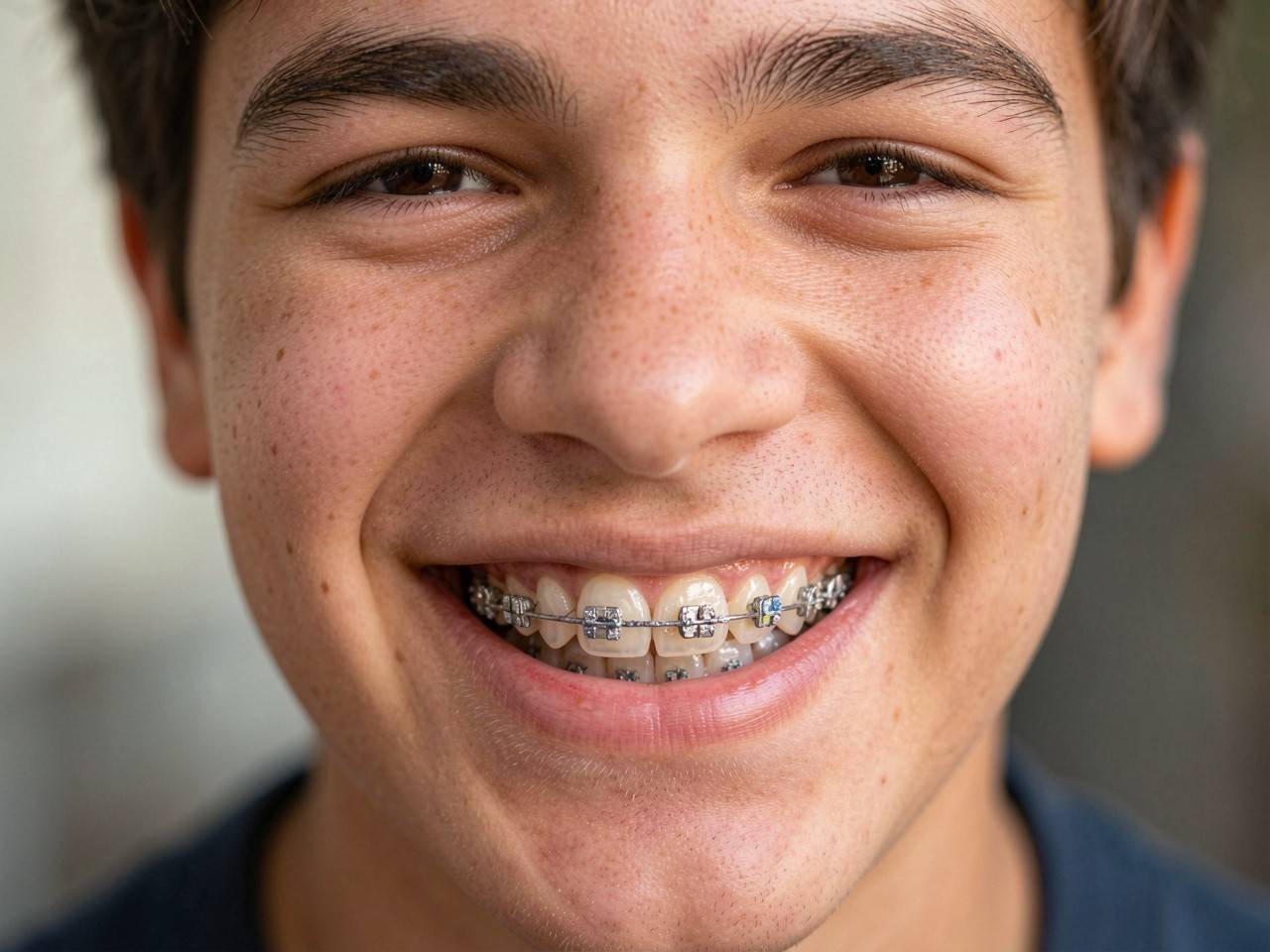
The best age for braces in children typically falls between 11 and 14 years. By this stage, most permanent teeth have erupted, and the jaw is still undergoing active growth. This combination allows orthodontists to move teeth efficiently while guiding skeletal development. Traditional metal braces, ceramic brackets, or clear aligners can all be effective during this window.
To help families compare treatment options during the teen years, the following table outlines common appliance choices, their ideal use cases, and lifestyle considerations. This breakdown supports your decision when exploring teen braces treatment.
Appliance Type | Best For | Key Advantages | Lifestyle Considerations |
Metal braces | Complex crowding, bite correction, extraction cases | Most precise control, durable, cost effective | Visible appearance, requires specialized cleaning |
Ceramic braces | Teens seeking less noticeable options | Tooth colored brackets blend with enamel | Slightly more fragile, may stain if not cared for |
Clear aligners | Mild to moderate spacing, disciplined wearers | Removable for eating and brushing, nearly invisible | Requires 20 to 22 hours daily wear for effectiveness |
Lingual braces | Patients prioritizing complete discretion | Brackets placed behind teeth, invisible from front | May affect speech initially, requires expert placement |
Many patients ask if adults can get braces. The answer is a confident yes. There is no strict braces treatment age limit. Modern orthodontic techniques safely shift adult teeth while respecting mature bone density and gum health. Adults pursue treatment to correct crowding, close gaps, improve bite function, or enhance smile aesthetics.
Orthodontic treatment for adults vs children differs in several ways:
The best age for teeth alignment is ultimately when you are ready to commit to the process. With disciplined care and professional guidance, adults achieve excellent, stable results.
Knowing when a child should see an orthodontist helps parents act proactively. Early detection of alignment issues can prevent more complex problems later. Use this checklist to evaluate whether an evaluation is warranted.
To help you recognize early warning signs, the following table maps common indicators to their potential implications and recommended next steps. This reference clarifies when to schedule an orthodontic consultation.
Warning Sign | Potential Issue | Recommended Action |
Early or late loss of baby teeth | Disrupted eruption sequence | Schedule evaluation to monitor permanent tooth positioning |
Crowded, overlapping, or crooked teeth | Insufficient arch space | Assess need for expansion or future braces |
Difficulty chewing or biting | Malocclusion or jaw misalignment | Evaluate bite function and jaw relationships |
Frequent mouth breathing | Airway or skeletal development concerns | Screen for nasal obstruction or jaw growth patterns |
Jaw shifts, clicking, or pain | Temporomandibular joint stress | Assess occlusion and consider early intervention |
Thumb sucking beyond age 5 | Forward tooth movement or open bite | Address habit and monitor dental effects |
A frequent concern is whether age matters for braces treatment. While younger patients benefit from active growth, can braces work at any age. Adult bone remodels in response to controlled orthodontic forces, allowing safe tooth movement at any stage of life. The key factors for success are healthy gums, realistic expectations, and consistent compliance with appliance wear and oral hygiene.
Timing your first consultation depends on individual needs. For children, the orthodontic checkup age of 7 establishes a monitoring baseline. For teens, evaluation before age 12 ensures treatment can begin during the optimal growth window. For adults, consultation is appropriate whenever alignment concerns affect function, comfort, or confidence.
Patients exploring orthodontic treatment in Panvel benefit from clinics that offer digital scanning, 3D treatment simulation, and transparent pricing. A thorough diagnostic visit clarifies whether your case requires early intervention, comprehensive braces, or clear aligner therapy.
Determining the best age for orthodontic treatment is less about a specific number and more about aligning care with individual development and goals. Early evaluation identifies risks, the teen years offer efficient comprehensive correction, and adulthood remains a viable time for transformation. When treatment timing matches biological readiness and patient commitment, results are stable, functional, and aesthetically rewarding. Ultimately, what age is best for orthodontic treatment depends on jaw growth, dental development, and individual treatment goals.
For families and adults seeking personalized orthodontic planning, Vichare Dental Clinic provides evidence based evaluations, modern appliance options, and structured retention protocols. Their approach combines precise diagnosis, patient education, and long term stability monitoring to ensure your smile investment delivers lasting confidence and oral health.
What age is best for orthodontic treatment?
The best age for orthodontic treatment is usually between 10 and 14 years, when most permanent teeth have erupted and jaw growth is still developing.
At what age should a child first visit an orthodontist?
Children should ideally have their first orthodontic evaluation by age 7 to identify early bite or jaw alignment issues.
Can orthodontic treatment start before all permanent teeth come in?
Yes, early orthodontic treatment may begin before all permanent teeth erupt if there are significant bite, spacing, or jaw development problems.
Is orthodontic treatment only for children and teenagers?
No, adults can also undergo orthodontic treatment successfully using braces or clear aligners to improve alignment and bite function.
What are the signs that a child may need braces?
Common signs include crowded teeth, gaps, difficulty chewing, mouth breathing, thumb sucking, protruding teeth, or uneven jaw alignment.
Is there an age limit for braces or orthodontic treatment?
There is no upper age limit for orthodontic treatment as long as the teeth and gums are healthy enough to support movement.
Why is early orthodontic treatment important?
Early treatment can guide jaw growth, prevent worsening alignment problems, reduce future treatment complexity, and improve oral function.
Are braces more effective during teenage years?
Yes, braces are often more effective during teenage years because the jawbones are still growing, allowing teeth to move more efficiently.
Can adults get braces for crooked or misaligned teeth?
Yes, adults can correct crooked teeth, spacing, and bite issues with modern orthodontic options such as metal braces, ceramic braces, or aligners.
How long does orthodontic treatment usually take?
Orthodontic treatment typically takes between 12 and 24 months depending on the severity of alignment and bite problems.

Copyright © 2026 Vichare Dental Clinic Panvel | All rights reserved
SEO & Management by DigiTeach Advertising Agency | Website Developed by Web Creators India