
Braces vs Clear Aligners: Which Is Better for Straightening Your Teeth?
August 22, 2026
Deciding to straighten your teeth is a significant step toward a healthier, more confident smile. However, choosing the right method can feel overwhelming with so many options available. The most common debate in modern orthodontics is braces vs clear aligners. While both treatments effectively move teeth into proper alignment, they differ significantly in appearance, comfort, lifestyle impact, and cost. Understanding these differences helps you make an informed decision that aligns with your dental needs, daily routine, and budget. This comprehensive guide compares traditional braces and clear aligner treatment to help you determine which option is best for your unique smile journey.
How Do Braces and Clear Aligners Work?
Before comparing features, it is essential to understand how each system achieves tooth movement. Traditional braces are fixed appliances consisting of metal or ceramic brackets bonded to the teeth and connected by a wire. The wire exerts continuous pressure, gradually shifting teeth into the desired position. Because they are permanently attached, braces work continuously without requiring any effort from the patient beyond maintaining oral hygiene.
Clear aligners, on the other hand, are a series of custom-made, transparent plastic trays. Each tray is slightly different, moving teeth incrementally over time. Patients wear each set for about one to two weeks before switching to the next in the series. Unlike braces, aligners are removable, offering flexibility but also requiring strict discipline to ensure treatment success. Both methods rely on the biological process of bone remodeling, but their delivery mechanisms create distinct experiences for the patient.
Braces vs Clear Aligners: Key Differences at a Glance
To help you visualize the core distinctions, use this detailed braces vs clear aligners comparison table to decide which option fits your lifestyle, budget, and clinical needs.
Feature | Traditional Braces | Clear Aligners |
Visibility | Highly visible (metal or ceramic brackets) | Virtually invisible transparent trays |
Removability | Fixed permanently until treatment ends | Removable for eating, drinking, and cleaning |
Dietary Limits | Avoid hard, sticky, and crunchy foods that can damage brackets or wires | Remove aligners while eating; normal foods can generally be eaten |
Oral Hygiene | Requires specialized flossing and brushing tools | Normal brushing and flossing routine |
Compliance | None required for wear time (fixed appliance) | Strict discipline needed (20–22 hours/day) |
Comfort | Potential for mouth sores and wire irritation | Smooth surfaces generally cause less cheek and gum irritation |
Treatment Speed | Can be more predictable for complex movements | Often effective for mild to moderate cases; treatment time depends on compliance and case complexity |
Ideal For | Severe crowding, rotations, and bite issues | Mild to moderate misalignments and aesthetics |
Appearance: Braces vs Clear Aligners
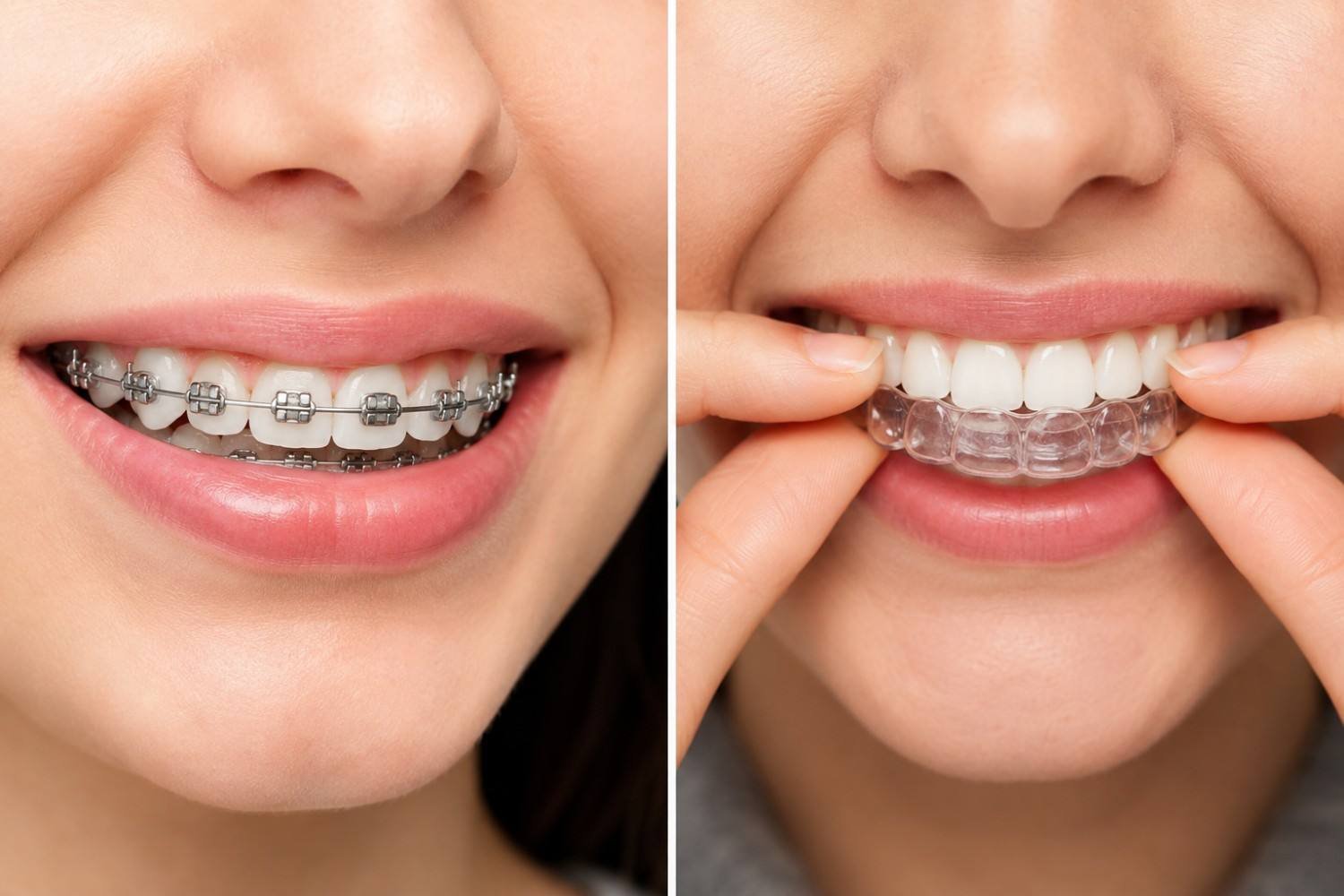
One of the most noticeable differences between braces and clear aligners is their appearance. Traditional metal braces are highly visible, which can be a concern for adults or teenagers who prefer a discreet look. While ceramic braces offer a less noticeable alternative by using tooth-colored brackets, the connecting wire remains visible.
Clear aligners are made from transparent medical-grade plastic, making them virtually invisible when worn. This aesthetic advantage is a primary reason many adults choose aligners over braces. For professionals who interact with clients or individuals who are self-conscious about their appearance during treatment, clear aligners provide a subtle way to straighten teeth without drawing attention. If aesthetics are your top priority, clear aligners generally offer a more seamless integration into your daily life.
Comfort and Pain: Braces vs Clear Aligners
Comfort levels vary significantly between the two options. Traditional braces can cause irritation to the inner cheeks and gums, especially after adjustments when the wires are tightened. Metal brackets may also rub against soft tissues, leading to sores that require wax or special rinses for relief. While modern braces have become smaller and smoother, some discomfort is inevitable during the initial placement and subsequent tightening appointments.
Clear aligners have smooth surfaces and generally cause less cheek and gum irritation than traditional brackets and wires. However, this does not mean they are pain-free. Many patients find aligner discomfort manageable, although each new set can cause temporary pressure or soreness. If you have a low pain threshold or sensitive gums, clear aligners may offer a more comfortable overall experience for many patients.
Lifestyle and Maintenance: Braces vs Clear Aligners
Your daily routine plays a major role in determining which treatment is more suitable. Traditional braces come with dietary restrictions. You must avoid sticky, hard, or crunchy foods like caramel, popcorn, nuts, and whole apples, as these can damage brackets or bend wires. Eating out requires extra caution, and food particles often get trapped in the hardware, making post-meal cleaning essential.
Clear aligners offer greater lifestyle flexibility. Since they are removable, you can take them out to eat whatever you like without worrying about damaging your appliances. This also simplifies oral hygiene. With braces, brushing and flossing require specialized tools like interdental brushes and water flossers to clean around brackets and wires. With aligners, you simply remove the trays and brush and floss your teeth normally, maintaining better gum health and reducing the risk of decay during treatment.
However, this convenience comes with a responsibility. Aligners must be worn for 20 to 22 hours a day to be effective. Forgetting to put them back in after meals or losing a tray can delay treatment progress. Because braces are fixed, they do not depend on daily wear-time compliance, which may make them more suitable for patients who may have difficulty consistently wearing removable aligners.
Treatment Time: Which Is Faster, Braces or Clear Aligners?
Treatment time varies considerably depending on the complexity of tooth movement, bite correction, patient age, and treatment compliance. Many orthodontic treatments take around 12–24 months, although simpler cases may finish sooner. For complex orthodontic issues, such as severe crowding, large gaps, or significant bite corrections, traditional braces are often more efficient due to their ability to provide precise control over tooth rotation and vertical movement.
For mild to moderate misalignments, clear aligners and braces often have similar treatment timelines. In some simple cases, aligners may even work faster due to advanced digital planning. An orthodontist will evaluate your specific needs to provide an accurate timeline. While speed is important, prioritizing accurate results ensures long-term stability and health.
Braces vs Clear Aligners Cost in Panvel
Cost is a significant factor for most patients. Generally, traditional metal braces are the more affordable option for teeth straightening treatment. Clear aligners tend to be more expensive due to the technology involved in digital scanning, 3D printing, and manufacturing custom trays.
Use this cost breakdown to understand the typical investment considerations for orthodontic treatment in Panvel. Note that prices vary based on case complexity and treatment duration.
Treatment Type | Typical Cost Consideration | Factors Influencing Cost |
Traditional Metal Braces | Usually the most economical option | Case complexity, duration, type of brackets |
Ceramic (Tooth-Colored) Braces | Generally more expensive than metal braces | Aesthetic material cost, laboratory fees |
Clear Aligners (Standard) | Often higher cost depending on the system and case complexity | Number of trays, brand, digital planning tech |
Premium Clear Aligners | Cost varies based on brand, treatment complexity, and provider | Brand premium, advanced features, provider expertise |
Note: Actual treatment costs vary based on individual case complexity, treatment duration, orthodontic system, and provider. A consultation is recommended for an accurate treatment estimate.
Effectiveness: Can Clear Aligners Treat Complex Cases?
A common question is whether clear aligners are as effective as braces. For mild to moderate crowding, spacing, and minor bite issues, clear aligners are highly effective and produce excellent results. Advances in aligner technology have expanded their capabilities, allowing them to address a wider range of orthodontic movements when treatment is appropriately planned and monitored.
However, for severe malocclusions, significant jaw discrepancies, or teeth that require substantial rotation, traditional braces remain a widely used and highly effective option for complex orthodontic movements. Braces offer continuous force and precise mechanical control that aligners sometimes struggle to replicate without extensive auxiliary tools. An experienced orthodontist in Panvel will assess your dental structure to determine if aligners can achieve your desired outcome or if braces are necessary for predictable, accurate results.
Who Is a Good Candidate for Braces or Clear Aligners?
Choosing between braces or clear aligners ultimately depends on your individual profile.
Good Candidates for Traditional Braces:
- Children and teenagers who may forget to wear removable appliances.
- Patients with severe crowding, large gaps, or complex bite issues.
- Individuals seeking a more cost-effective solution.
- Patients who prefer a fixed treatment option without the need to remember daily aligner wear.
Good Candidates for Clear Aligners:
- Adults and professionals who prioritize a discreet appearance.
- Patients with mild to moderate alignment issues.
- Individuals with the discipline to wear trays for 22 hours a day.
- Those who value the ability to eat freely and maintain easy oral hygiene.
Choosing Between Braces and Clear Aligners
Deciding between braces and clear aligners is a personal choice influenced by your dental condition, aesthetic preferences, lifestyle, and budget. Both braces and clear aligners can effectively straighten teeth when appropriately selected and monitored by a dental professional. The better option depends on the complexity of your case, treatment goals, lifestyle, budget, and ability to follow the treatment plan. Traditional braces offer precise control for many complex orthodontic movements and require no daily compliance effort, making them a robust choice for many. Clear aligners provide a discreet, comfortable, and flexible alternative for those with mild to moderate alignment needs who can commit to consistent wear. By understanding the pros and cons of each, you can choose the path that best supports your goal of a healthy, straight smile.
Orthodontic Treatment at Vichare Dental Clinic
If you are considering teeth straightening in Panvel, Vichare Dental Clinic offers comprehensive orthodontic solutions tailored to your needs. Located in Old Panvel with easy access from New Panvel and surrounding areas, the clinic provides both traditional braces and clear aligner treatment. The experienced team uses modern diagnostic tools to create personalized treatment plans that ensure efficient, predictable, and comfortable results.
Whether you are looking for braces in Panvel or exploring clear aligner treatment in Panvel, Vichare Dental Clinic prioritizes transparency, patient education, and clinical excellence. To schedule your orthodontic consultation and discover the best option for your smile, contact Vichare Dental Clinic today at +91 94220 26725 or +91 99220 31747. Start your journey to a confident smile with a trusted orthodontist in Panvel who cares about your long-term oral health.
FAQs About Braces and Clear Aligners
What is the difference between braces and clear aligners?
Braces use brackets and wires that remain fixed to the teeth, while clear aligners use a series of removable transparent trays to gradually move the teeth. The right option depends on the type and complexity of the alignment problem, treatment goals, and lifestyle.
Which is better: braces or clear aligners?
Neither option is universally better. Braces can provide precise control for complex tooth movements and bite corrections, while clear aligners offer advantages in aesthetics, removability, and convenience for appropriate cases. The best choice depends on your specific dental needs, treatment goals, and lifestyle.
Are clear aligners painful?
Clear aligners cause mild pressure and soreness when you switch to a new tray, but they are generally more comfortable than braces because they lack metal brackets and wires that can irritate the cheeks and gums.
How long do braces take to straighten teeth?
Treatment commonly takes around 12–24 months, but the exact timeline depends on the complexity of the case and how teeth respond to treatment.
How long do clear aligners take to straighten teeth?
Treatment time varies by case and may range from several months to more than a year. Consistent wear is important for staying on schedule.
What can you eat with braces?
With braces, you should avoid sticky, hard, and crunchy foods like caramel, gum, nuts, popcorn, and hard candies to prevent damage to brackets and wires. Soft fruits, cooked vegetables, and dairy are safe options.
What can you eat with clear aligners?
You can eat anything with clear aligners because you remove them during meals. Just remember to brush your teeth before putting the trays back in to prevent trapping food and bacteria against your teeth.
Are clear aligners worth it?
Yes, for many patients, clear aligners are worth the investment due to their invisibility, comfort, and convenience. However, they require strict discipline. If you cannot commit to wearing them 22 hours a day, braces may be a more reliable option.
Can clear aligners fix crowded teeth?
Yes, clear aligners can effectively fix mild to moderate crowded teeth. For severe crowding, traditional braces may be more efficient at creating space and aligning teeth precisely.
Which is easier to maintain: braces or aligners?
Clear aligners are easier to maintain in terms of oral hygiene, as you can brush and floss normally. Braces require specialized cleaning tools and more time to ensure food particles do not remain trapped around brackets.